How to Actually Build Muscle
Most of what you’ve been told about building muscle is either outdated, exaggerated, or came from someone trying to sell you something. The actual science is considerably less complicated — and more forgiving — than the fitness industry wants you to believe.
The one thing that actually drives muscle growth
Mechanical tension. That’s it.
When a muscle contracts against resistance and is pushed close to its limit, it triggers a cascade of cellular responses that result in the muscle fibres repairing and growing larger. This process is called hypertrophy, and a comprehensive 2026 review confirmed what exercise scientists have suspected for years: mechanical tension is the primary driver, while other popular concepts — metabolic stress, acute hormonal spikes, “the pump”, muscle damage — either play a minor supporting role or no meaningful role at all.
What this means practically: the muscle needs to work hard, and it needs to work progressively harder over time. That principle is called progressive overload, and it is the non-negotiable foundation of every effective training programme ever written.
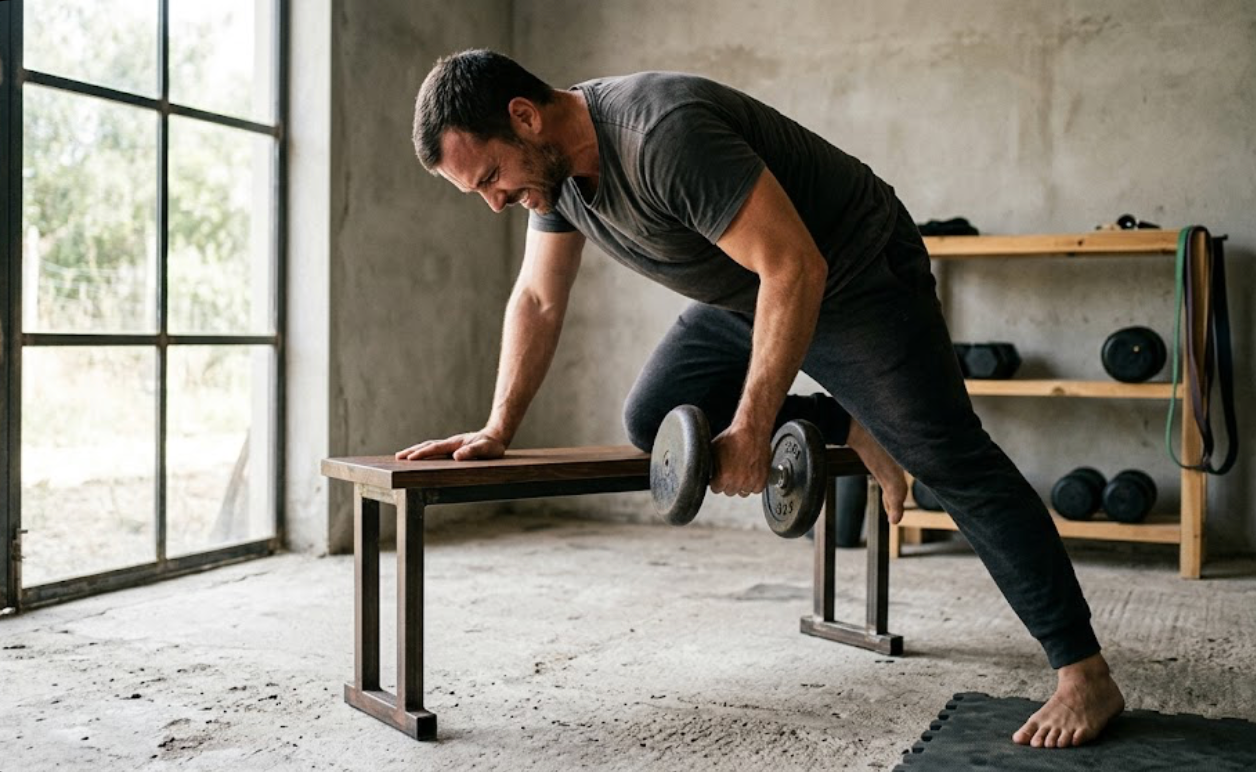
Progressive overload doesn’t require a gym. It means that week on week, you are asking slightly more of the muscle — more weight, more reps, more sets, less rest, or better form through a longer range of motion. The method is less important than the direction of travel.
How much muscle can you actually build?
Less than Instagram suggests, and more than you might expect.
Research tracking untrained adults through resistance training programmes found that realistic expectations for natural muscle gain are around 1.5 kg of fat-free mass over 10–12 weeks for someone starting from scratch. Over a full year, well-trained lifters working consistently average between 2.5 and 4 kg of actual muscle. That’s meaningful — but it’s also why anyone claiming to have gained 10 kg of muscle in three months is either mistaken, on something, or selling something.
I spent years confused by this gap between what fitness content promised and what my body actually did. The muscle I’ve built in my 40s is modest by the standards of the content I was consuming, and completely in line with what the research would have predicted. The gap was in my expectations, not my effort.
Protein: what the evidence actually recommends
The science here has converged considerably. For adults training to build muscle, the sweet spot sits between 1.6 and 2.2 grams of protein per kilogram of body weight per day. A 2018 meta-analysis covering nearly 1,900 participants found that protein intakes above 1.6 g/kg produced diminishing returns for muscle growth, though some individuals — particularly those with more training experience — may benefit from pushing toward the upper end.
To put that in real terms: an 80 kg person should be aiming for roughly 128–176 grams of protein per day.
What doesn’t matter as much as people think: timing. The idea that you must consume protein within 30 minutes of training or the window closes has been substantially debunked. Total daily intake matters far more than the precise timing of individual meals. Getting adequate protein across your day — in whatever pattern suits your life — is what drives the adaptation.
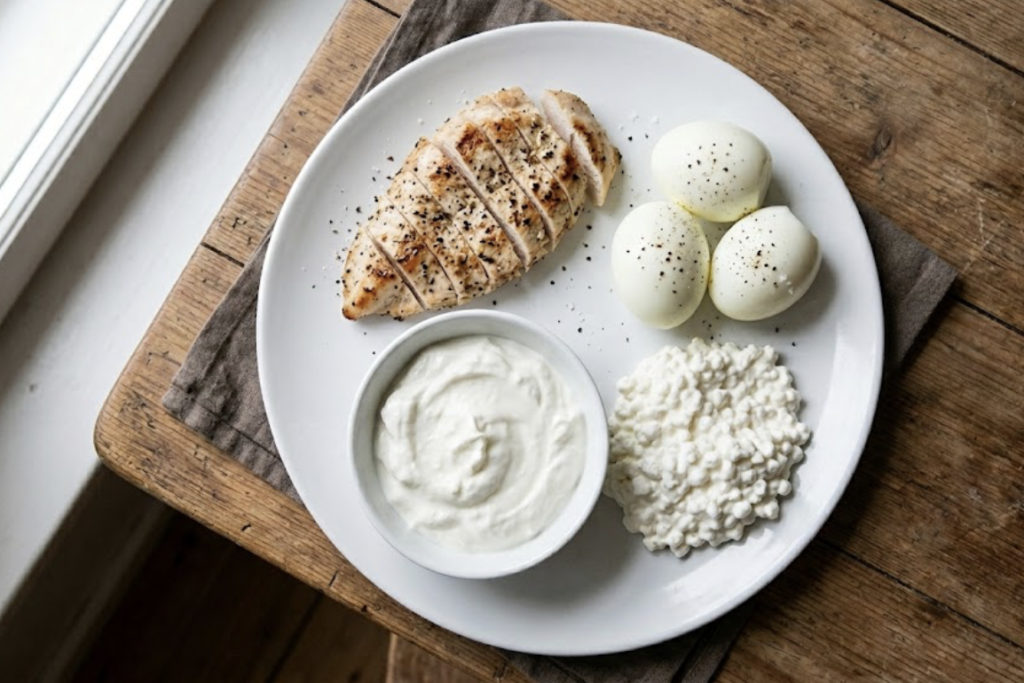
Sources worth knowing: lean meat, eggs, Greek yoghurt, cottage cheese, legumes, and fish cover most people’s needs without supplements. Protein powder is a useful top-up if you’re consistently short, not a requirement.
Enter your bodyweight — get your daily target range based on current research.
Training: sets, reps, and frequency
The research is more flexible here than training culture would have you believe.
Both high-rep and low-rep training build muscle effectively, provided the sets are taken close to failure. A set of 5 heavy reps and a set of 20 lighter reps produce comparable hypertrophy when both are done with genuine effort. This is useful for people training at home or with limited equipment — resistance that feels challenging across a range of rep counts is sufficient.
Volume — the total number of sets per muscle group per week — matters more than the specific rep range. Most research points to 10–20 working sets per muscle group per week as the effective zone for most trained adults, with beginners making significant progress on considerably less.
Frequency: training each muscle group twice per week outperforms once per week in most studies. Full body training three times per week or an upper/lower split four times per week both achieve this efficiently.
If you're starting out: three full body sessions per week, 2–3 sets per exercise, taken to within 2–3 reps of failure, increasing the weight or reps slightly each week. That's it. The complexity comes later, if you want it.
Sleep: the variable most people ignore

Muscle isn't built in the gym. It's built during recovery — and recovery happens primarily during sleep.
Around 75% of the body's growth hormone is released during deep sleep, concentrated in the first few hours after you fall asleep. Below six hours per night, growth hormone secretion decreases measurably, cortisol rises, and muscle protein synthesis is impaired. The training you do in the gym is essentially a stimulus. Sleep is where the body responds to it.
Research consistently supports 7–9 hours for most adults pursuing muscle growth, with 8–9 hours being optimal for those training hard. Seven hours works, but it leaves adaptation on the table.
One finding worth knowing: consuming casein protein — found in cottage cheese, Greek yoghurt, and casein powder — before bed has been shown in research published in Medicine and Science in Sports and Exercise to increase muscle protein synthesis rates overnight, because its slow-digesting profile provides a steady supply of amino acids while you sleep.
The gear that's actually useful
A brief and unapologetic list.
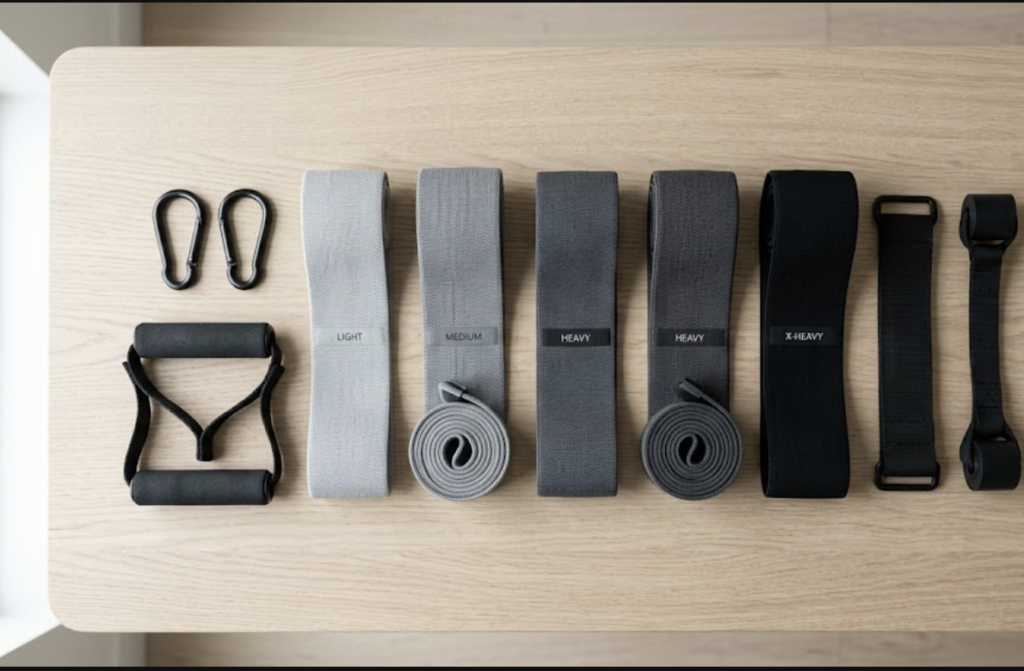
Resistance bands are the single most versatile piece of home training equipment. A set covering light, medium, and heavy resistance covers the full range of exercises — rows, presses, curls, hip hinges — and costs a fraction of any machine. They're also useful for warm-up and mobility work between sets.
Adjustable dumbbells are worth the investment if you're serious about training at home long-term. Fixed-weight sets become limiting quickly. A quality adjustable set covers the range you need without a rack of individual weights taking over a room.
A doorframe pull-up bar costs very little and adds the one movement that resistance bands and dumbbells don't replicate well: vertical pulling. If you can do pull-ups, you have most of upper back training covered.
Protein powder — if you're consistently 30–50 grams short of your daily target, a straightforward whey or plant-based protein addresses that without complication. Unflavoured or lightly flavoured versions from reputable brands are what they are: protein in a convenient form.
Skip the pre-workouts, the BCAAs, the testosterone-boosting mushroom extracts, and anything else that promises to amplify your gains beyond what training and food will provide. The research doesn't support them, and the marketing is extraordinary.
What doesn't work (but sounds like it should)
Training to failure on every set. Research shows training close to failure is important — within 2–4 reps is the effective zone — but going to absolute failure on every set increases injury risk and impairs recovery without meaningfully increasing hypertrophy.
Soreness as progress. Delayed onset muscle soreness is not a reliable indicator that muscle growth occurred. It's a response to novel or unusual stress. You can build muscle without feeling destroyed the next day, and you can feel destroyed without growing much at all.
Eating in a large calorie surplus. A modest surplus of 200–300 calories above maintenance is sufficient to support muscle growth while minimising fat gain. Bulk and cut cycles are a legitimate strategy, but they're not necessary for most people.
Chasing hormonal spikes. Training does transiently raise testosterone and growth hormone. Those acute spikes do not predict muscle gain. What predicts muscle gain is consistent training, adequate protein, and adequate sleep — applied over months.
The actual timeline
Month one is almost entirely neurological. Your body is learning to recruit muscle fibres more efficiently. You will get stronger faster than you will get bigger. This is normal and not a sign that the training isn't working.
Months two to four: visible changes begin for most people. Clothes fit differently before the scale does much.
Month six onwards: the work starts to compound. The progress from this point is slower than the early gains but more durable.
A year of consistent training, eating enough protein, and sleeping adequately produces results that most people would be satisfied with — and a base from which further progress is considerably easier. The people who fail are almost universally not the ones who trained wrong. They're the ones who stopped.
If you're building toward fitness in your 40s and want the longer version of what that actually looks like in practice, the fitness journey that changed how I think about all of this is worth reading. And if you want somewhere to start today without equipment, the 30-minute no-equipment workout is exactly what it says.