
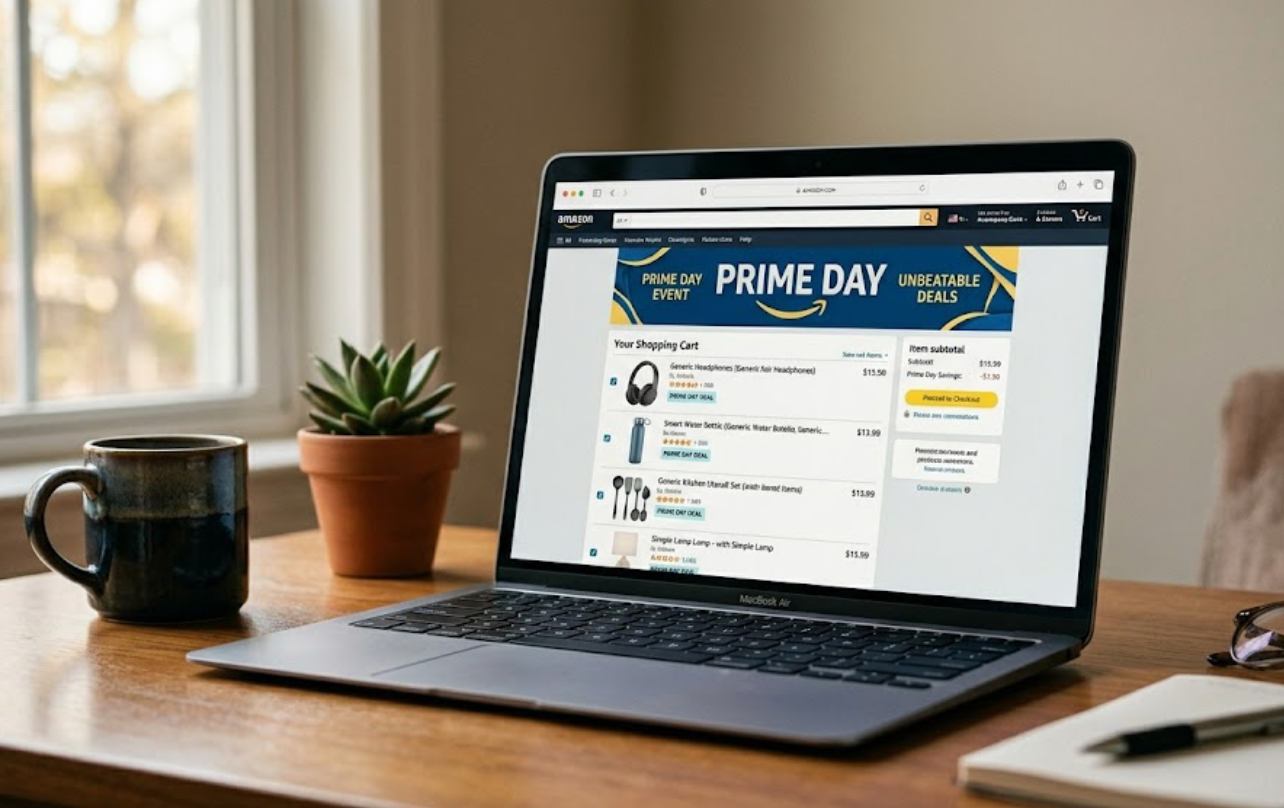
Amazon Prime Day 2026 — What It Is, When It Is, and Whether It’s Worth It
Amazon Prime Day 2026 ran from June 23rd to June 26th. Four days, millions of deals, and enough marketing noise to make you feel like you were missing out on something even if you weren’t entirely sure what.
Here’s what Prime Day is, what it isn’t, and how to navigate the next one without spending money on things you didn’t need before Amazon told you they were 50% off.
What Prime Day actually is
Prime Day started in 2015 as a one-day sale to celebrate Amazon’s 20th anniversary. It has since expanded to four days, spawned competing sales from every major retailer, and become one of the biggest shopping events of the year globally — bigger than Black Friday by some measures in terms of units sold.
The deals are real. That’s worth saying clearly because the cynical take — that it’s all manufactured discounts on inflated prices — isn’t entirely accurate. Some of it is. But good deals on products worth buying do appear, particularly on Amazon’s own products and from brands using Prime Day as a proper clearance opportunity.
The catch is volume. Millions of deals across four days means the good ones are buried under a significant amount of noise. The skill is knowing what to look for before you start looking.
You need Prime to access Prime Day deals
This is worth knowing upfront. Prime Day deals are exclusively for Amazon Prime members. If you’re not a Prime member you won’t be able to purchase at the sale price.
Amazon Prime costs vary by market:
UK: £8.99/month or £95/year
IE: €8.99/month or €95/year
AU: A$9.99/month
What you actually get with Amazon Prime
Here’s what the membership includes beyond Prime Day access:
Free delivery on over 300 million items, with Prime members in the US saving an average of over $550 on deliveries in a year — nearly four times the annual membership fee. Prime Video, Amazon Music with over 100 million songs, Whole Foods grocery discounts and a Grubhub+ membership are also included.
A standard membership costs $14.99 per month or $139 annually. Students pay $7.49 per month or $69 per year. New members get a 30-day free trial — students get six months.
If you’re signing up purely for the deal events, the 30-day free trial covers a full sale window — the next Prime event lands in October. Whether Prime is worth the annual fee beyond that depends on how much you use the delivery benefits and Prime Video — but the trial costs nothing and you can cancel before it ends.
→ Start your free Prime trial here
What sells well on Prime Day — and what doesn’t
Prime Day consistently produces strong deals in certain categories:
Electronics and tech — this is where Prime Day earns its reputation. Laptops, tablets, headphones, smart home devices and Amazon’s own products (Echo, Kindle, Fire TV) typically see their steepest discounts of the year. If you’ve been waiting to buy something specific in this category, Prime Day is worth timing your purchase around.
Amazon’s own products — Echo devices, Kindles, Ring cameras and Fire tablets are almost always at their lowest prices of the year during Prime Day. If you want any of these, this is when to buy.
Kitchen and home — good deals appear here but require more filtering. The properly discounted items are mixed with a large volume of products that aren’t particularly good at any price.
Health and fitness — supplements, gym equipment and fitness trackers feature prominently. Worth checking if you have something specific in mind.
Clothing and fashion — historically weaker for Prime Day. Not the event to prioritise for this category.
Where Prime Day is less impressive
Big ticket items like furniture, appliances and mattresses occasionally appear but the discounts are rarely as dramatic as the marketing suggests. These categories are better served by end of season sales or dedicated retailer events.
Grocery and food deals exist but the savings are modest compared to other categories.
How to spot a real deal
The single most useful tool for Prime Day shopping is a price history tracker. Before buying anything, check whether the current “sale” price is actually lower than the price has been historically.
→ CamelCamelCamel.com (tracks Amazon price history, free)
→ Keepa.com (similar, with browser extension)
Both show you a product’s price over time. If something is listed at 50% off but the “original” price is higher than it has ever actually sold for, the discount is manufactured. If the current price is the lowest it has been in 12 months, the deal is real.
This takes thirty seconds per product and prevents the most common Prime Day mistake — buying something at a “discount” that isn’t actually discounted.
The five minute deal drops
Amazon announces that new deals drop as often as every five minutes during select periods. This creates urgency — a deliberate psychological mechanism designed to make you buy quickly before thinking clearly.
Ignore the countdown timers. If a deal disappears before you’ve decided whether you actually want the product, that’s probably fine. Another deal will appear. The ones worth having tend to last longer than five minutes anyway.
What we covered during Prime Day
We published a separate guide to the deals worth buying, updated across the four days, with a post-event verdict on what held up and what didn’t. It isn’t exhaustive. If something wasn’t worth buying at the sale price, it isn’t in there.
→ Best Amazon Prime Day Deals 2026 — The Ones Actually Worth Buying
Prime Day, in hindsight
Prime Day was worth paying attention to if you had something specific in mind. The deals on electronics, tech and Amazon’s own products were, as usual, among the best of the year.
It was not worth buying things you didn’t want beforehand just because they appeared to be discounted. That’s how you end up with a smart speaker you don’t use and a set of resistance bands still in the packaging.
The same rules apply when the next sale window rolls around — Prime Big Deal Days in October, Black Friday in November, and Prime Day again next summer. Check the price history. Buy things you already wanted. Ignore the countdown timers.


