
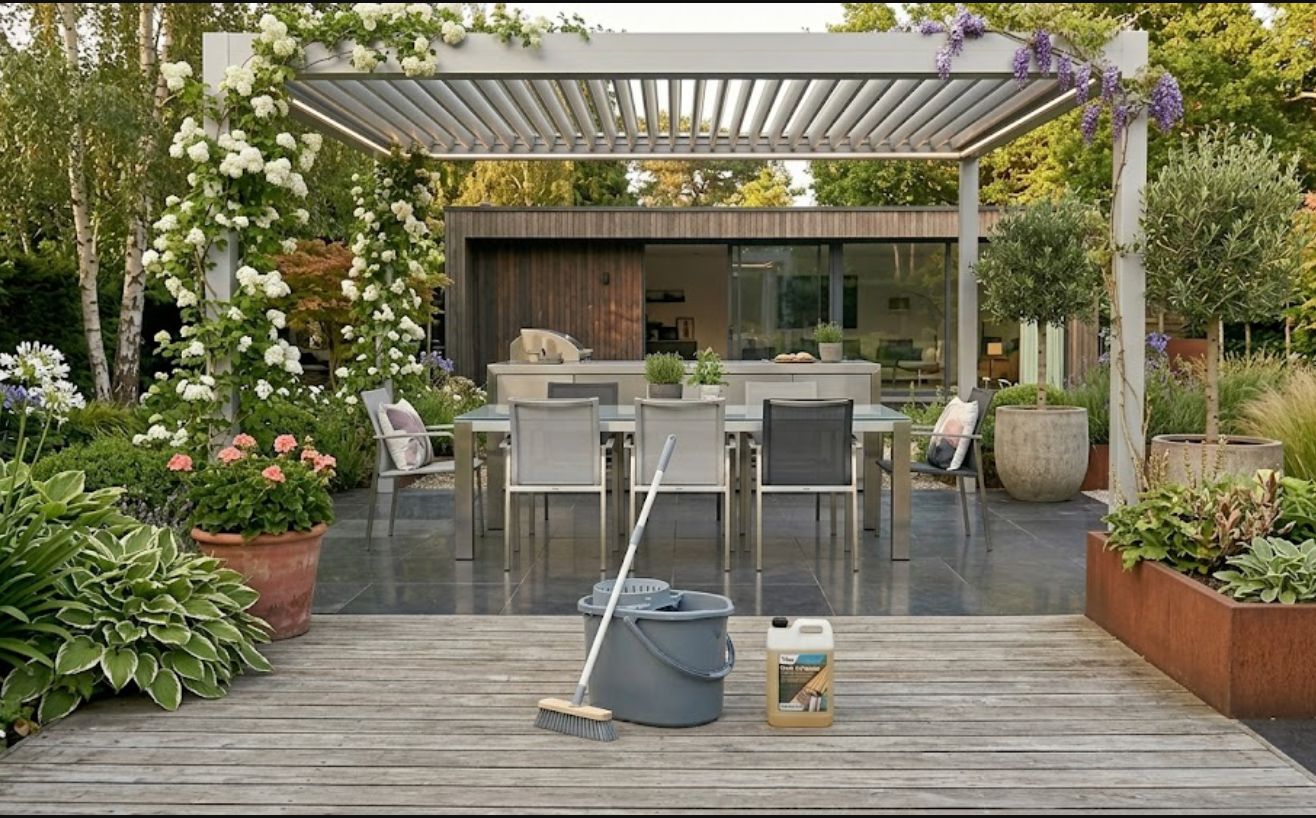
How to Clean Your Patio or Decking
Your decking looked fine in October. You covered it, forgot about it, uncovered it in April and now you’re standing in front of something that looks like it’s been colonised by a small ecosystem. Green algae, black mould spots, a general griminess that wasn’t there when you bought the place.
The good news: most of it comes off without specialist equipment, expensive products, or anything more dramatic than an afternoon and some elbow grease to have a brand new looking clean patio. Here’s how.
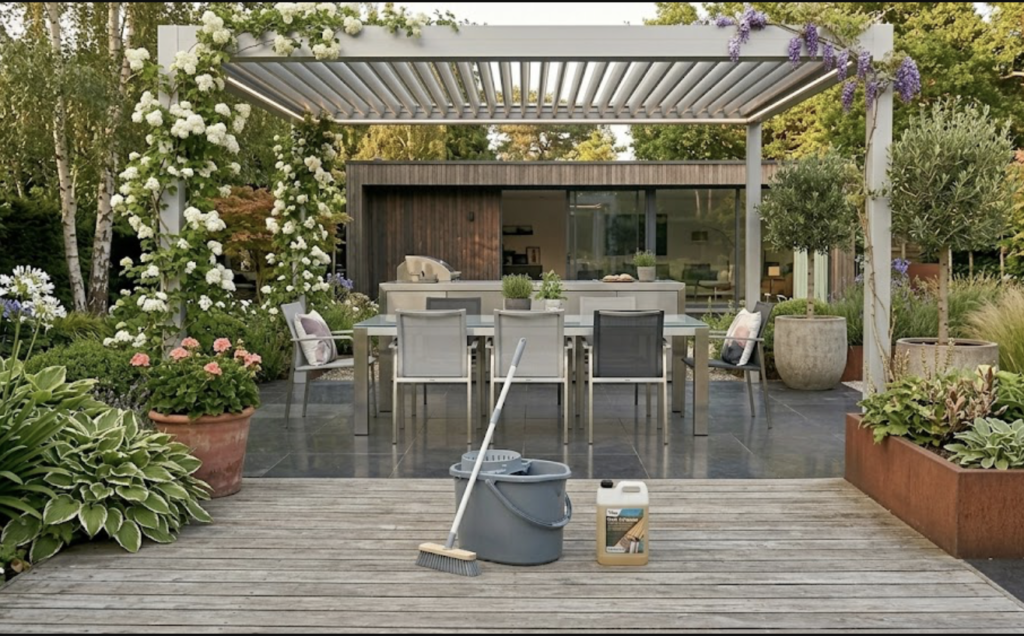
The Clean Patio and Decking tips
Before you buy anything — assess what you actually have
Decking, paving and patios are different materials with different needs. Treat them the same and you’ll either damage the surface or waste an afternoon achieving nothing.
Timber decking — needs cleaning but also needs protection. Cleaning without treating afterwards leaves it vulnerable.
Composite decking — easier to clean, doesn’t need sealing or oiling, but some composite boards stain if you use the wrong products. Check the manufacturer guidance before applying anything.
Paving slabs / concrete — the most forgiving. Most cleaning methods work. The issue is usually the joints between slabs as much as the surface itself.
Natural stone — requires the most care. Acidic cleaners damage limestone and sandstone. Stick to pH neutral products or the methods below.
Start with the oldest trick in the book
Before you buy anything, try this:
Boiling water poured directly onto algae and moss kills it on contact. It sounds too simple to work. It works. Repeat across the affected area, leave for ten minutes, then scrub with a stiff brush. For light green growth on paving this is often all you need and it costs nothing.
The follow-up: white vinegar diluted 50/50 with water, applied with a garden sprayer or watering can, left for twenty minutes, scrubbed and rinsed. Kills remaining algae, lifts general grime, completely natural and safe for pets once dry.
Do not use undiluted vinegar on natural stone — the acid damages the surface.
The baking soda method for stubborn stains
For oil stains, rust marks, or anything that boiling water didn’t shift:
Make a paste of baking soda and washing up liquid. Apply directly to the stain, leave for thirty minutes, scrub with a stiff brush and rinse thoroughly. Repeat if needed. This works on most paving and composite surfaces and costs pennies.
For really stubborn oil stains — the kind left by a BBQ that’s lived in one spot for three summers — cat litter or sawdust pressed into the stain overnight to absorb the oil first, swept away the next morning, then the baking soda treatment.
The washing up liquid pressure wash
If you have access to a pressure washer — or can borrow one — add a small amount of washing up liquid to the detergent tank and give the whole area a proper going over before any other treatment. This removes the bulk of the surface grime and reveals what actually needs attention.
Keep the pressure washer at least 30cm from timber decking and use a wide fan nozzle. Pressure washers on high settings at close range damage wood fibres and open up the grain to water ingress.
On composite decking: check the manufacturer guidance. Some composite boards void their warranty if you pressure wash them above certain pressure ratings.
For decking specifically — the old wives were right about this one
A mixture of washing soda crystals (not baking soda — washing soda, also called soda ash) dissolved in hot water is one of the most effective natural decking cleaners available. Apply with a mop or brush, leave for fifteen minutes, scrub and rinse.
It lifts algae, general grime and light weathering marks without damaging the wood. Follow with a deck oil or treatment once dry for best results.
Soda crystals cost very little and are available in most supermarkets. They’re also useful for about forty other cleaning tasks which makes them one of the more useful things to have in the shed.
Between the slabs — the part everyone ignores
The joints between paving slabs are where moss and weeds establish first and where cleaning is most difficult. A pressure washer handles some of it. A weeding knife or old kitchen knife handles the rest.
For ongoing prevention: polymeric jointing sand brushed into the joints after cleaning locks them in place and makes it significantly harder for weeds to establish. It’s a one-off job that saves an hour of weeding every subsequent summer.
When natural methods aren’t enough
If you’ve tried the above and the surface is still significantly discoloured — particularly with black spot algae which is notoriously persistent — a dedicated patio cleaner is the next step.
Look for oxygen-bleach based products rather than chlorine bleach. They’re more effective on organic growth, safer for surrounding plants and pets once dry, and don’t leave the surface as vulnerable to re-growth.
The products worth having:
A bottle of concentrated patio cleaner for serious jobs and seasonal treatment.
A stiff outdoor brush — the kind with a long handle so you’re not on your knees for an afternoon.
A garden sprayer for applying diluted solutions evenly rather than splashing them around hopefully.
For timber decking — don’t skip the treatment
Cleaned decking that isn’t treated afterwards will look worse by next spring than decking that was never cleaned. Cleaning opens up the wood grain and removes the protective oils — treatment puts them back.
A good decking oil applied after cleaning extends the life of the wood significantly and keeps it looking good year after year. One tin, one afternoon, once a year.
The renovation question — when cleaning isn’t enough
If the decking has gone grey and the surface is rough and splintered, cleaning alone won’t restore it. Two options:
Decking stain or paint — covers the weathering, protects the wood, changes the colour if you want it to. Significant cosmetic improvement, relatively easy to apply with a roller or brush.
Sanding — a belt sander or orbital sander on rough decking removes the weathered surface layer and reveals the cleaner wood underneath. More work, better result. Follow with oil or stain.
If the boards are structurally sound but cosmetically tired, sanding and oiling will make them look like new. If individual boards are rotten — soft when you press them, springy underfoot — replace them individually rather than the whole deck.
Once it’s clean — keep it that way
The easiest way to maintain a clean patio or deck is a quick scrub with washing up liquid and a stiff brush every month or six weeks throughout summer. Fifteen minutes prevents an afternoon.
A half-strength white vinegar spray once a month on areas prone to algae keeps growth from establishing. Your neighbours will wonder how you keep it looking so good. You don’t have to tell them it’s vinegar.
And once the outdoor space is sorted — if you’re thinking about new garden furniture to go with your newly pristine patio, our guide to the best garden furniture that actually survives the weather has everything you need.

